



AI & Generative AI in Logistics: Jobs, Startups, and Companies Driving the Future of Supply Chains
Introduction:
Artificial Intelligence (AI) is driving one of the largest changes in the history of the logistics sector. AI logistics solutions are revolutionizing the global movement of goods, from automating warehouses to forecasting demand and optimizing delivery routes. Not only is AI making waves in 2025, but generative AI is also revolutionizing the field by enabling real-time decision-making, simulating scenarios, and developing completely new solutions. These developments have created new career paths in AI logistics, provided opportunities for creative startups in the field, and enabled well-established AI logistics firms to expand their operations to unprecedented levels. Knowing how AI logistics software and tools are changing the industry is crucial for anyone working in the field, whether they are investors, professionals, or company owners. also american ai logsitcs
The Benefits of AI and Generative AI for Logistics
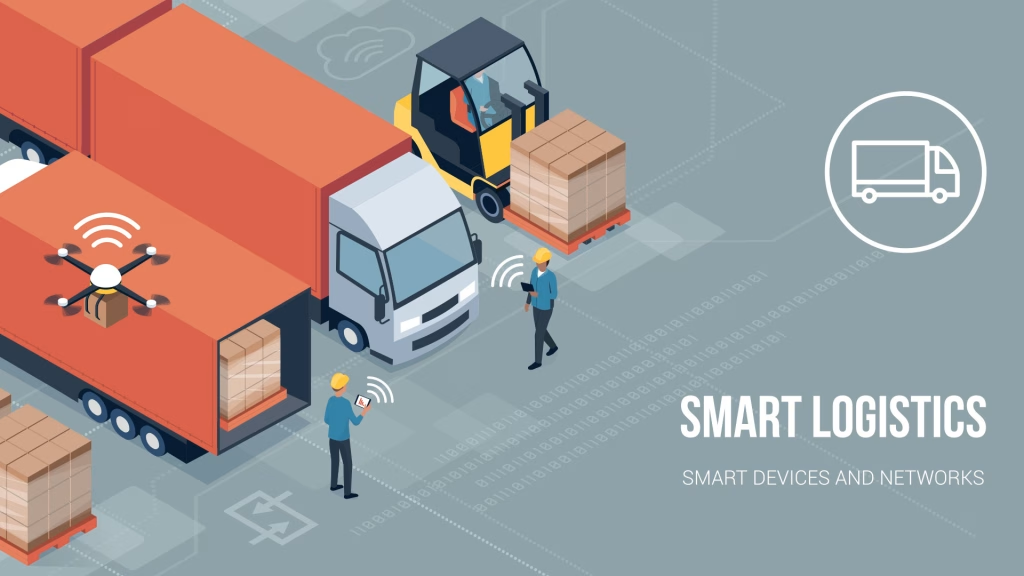
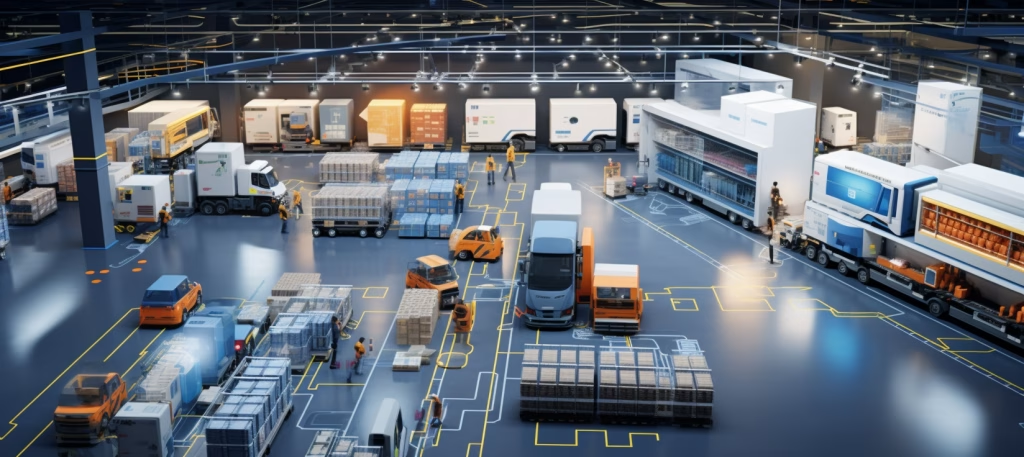
Large amounts of historical and real-time data are being analyzed by AI logistics companies using machine learning, which enables them to forecast demand, prevent delays, and reduce operating expenses. By creating efficient delivery schedules, modeling warehouse layouts, and automatically creating updates for clients and suppliers, generative AI goes beyond this. An AI logistics tool, for instance, can identify a weather disruption in a particular area and immediately reroute shipments to prevent delays. Robots with artificial intelligence (AI) can pick, pack, and sort goods in warehouses more quickly and precisely than human employees while also learning and getting better all the time. Startups in AI logistics are also experimenting with digital twins, which are virtual copies of complete supply chains that let businesses test ideas before putting them into practice. As a result, deliveries are made more quickly against disruption
Advantages of AI & Generative AI in Logistics
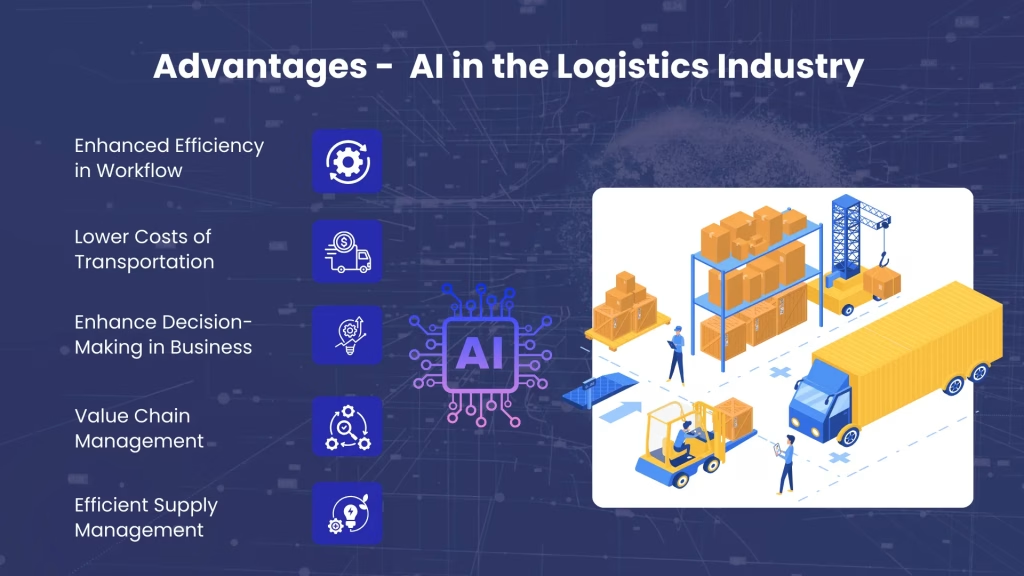
The benefits of AI logistics systems are undeniable. They improve efficiency and speed by automating decision-making, reducing manual intervention. Costs drop significantly as AI logistics software optimizes routes, fuel usage, and warehouse storage. Real-time adaptability allows operations to respond instantly to traffic congestion, port delays, or sudden demand surges. Data-driven accuracy reduces forecasting errors, and sustainability improves through better load management and fewer empty trips. Many AI logistics LLC operations are now using these tools to meet environmental goals while saving money. These advancements are also creating a surge in AI logistics jobs, as companies need skilled professionals to manage and maintain these systems.
Disadvantages and Challenges
Adopting AI logistics solutions has drawbacks despite the obvious benefits. IoT sensors, infrastructure, and AI logistics software can be expensive to implement, particularly for smaller companies. Since AI logistics tools need sensitive shipment and customer data to work properly, data privacy is an issue. There is also opposition from the workforce, as some people worry that AI logistics firms will take the place of human workers, despite the fact that AI frequently complements humans rather than completely replaces them. Additionally, relying too much on automated systems may leave you vulnerable in the event that they malfunction or are compromised.
AI Logistics Jobs: New Careers in a High-Tech Industry
The integration of AI into logistics is creating a wave of new job opportunities. Positions like AI logistics systems engineer, AI-powered warehouse operations lead, and predictive analytics manager are becoming increasingly common. These AI logistics jobs require a mix of technical expertise and logistics knowledge. Companies also need data analysts to interpret AI-driven insights, project managers to oversee AI implementation, and cybersecurity experts to protect AI logistics tools from threats. As the industry grows, professionals who can bridge the gap between AI technology and supply chain operations will be highly sought after.
AI in logistics is projected to boost global supply chain efficiency by up to 45% and save the industry over $50 billion annually by 2030.
AI Logistics Startups: Rapidly Advancing Pioneers
AI logistics startups are reshaping the industry with bold, innovative solutions. Without the burden of outdated systems, they can adopt the latest AI logistics software and tools quickly. Many focus on specialized areas such as last-mile delivery optimization, AI-driven customs clearance, or sustainable freight routing. Some startups are developing AI-powered freight marketplaces, while others work on autonomous delivery vehicles and drone-based shipment systems. Because they operate with agility, AI logistics startups can test and launch ideas faster than larger companies, often becoming acquisition targets for major AI logistics LLC players.
AI Logistics Firms: Worldwide Leaders in the Sector
Well-established AI logistics firms contribute infrastructure, scale, and worldwide reach to the adoption of AI. They run sizable fleets, oversee vast networks of warehouses, and incorporate AI logistics tools at every turn, from dynamic route planning that takes traffic, weather, and customs delays into account to inventory management and predictive maintenance. In order to help other companies optimize their supply chains without having to start from scratch, many of these companies also license AI logistics software. These businesses are using AI logistics tools to reduce emissions while preserving profitability as sustainability becomes a top priority.
How These Sectors Work Together
An interconnected ecosystem is made up of AI logistics startups, AI logistics companies, and the expanding number of AI logistics jobs. Established businesses offer global scale, startups bring innovation, and qualified experts make sure the systems function properly. The logistics industry’s quick transformation is made possible by this partnership.
Facts About AI in Logistics
The AI logistics market is projected to reach $77 billion by 2032, and AI-powered route optimization can cut delivery times by up to 20%. Over 60% of AI logistics companies have already integrated AI logistics tools into their operations, and many AI logistics startups are offering affordable, cloud-based AI logistics software for smaller businesses.
Typical Myths Regarding AI in Logistics
A common myth is that AI will replace all human jobs. In reality, AI logistics tools handle repetitive tasks, freeing people to focus on higher-level decision-making. Another misconception is that AI logistics software is only for large corporations; in truth, AI logistics startups are making it accessible to small and medium-sized businesses. Finally, while AI improves accuracy, it is not infallible—it depends heavily on the quality of the data it processes.
The Future of AI & Generative AI in Logistics
The next wave of innovation will see AI logistics systems capable of negotiating contracts, adjusting insurance rates, and autonomously managing full delivery networks. AI logistics startups will keep pushing the boundaries with specialized solutions, while AI logistics companies will expand their global reach and capabilities. As AI models become more advanced, logistics will become faster, greener, and more resilient.
In Conclusion:
In order to remain competitive in the logistics sector, artificial intelligence (AI) and generative AI are now necessary. These technologies are revolutionizing supply chains on all fronts, from enabling AI logistics startups and empowering AI logistics companies to generating new AI logistics jobs. The possible advantages greatly exceed the risks, even though issues like cost, data security, and workforce adaptation still exist. Businesses, professionals, and investors should get involved now because AI logistics is not only the industry’s future, but also its present.